TDK supplies the backbone components of modern telecom infrastructure. Our MLCCs and inductors are designed for 5G NR base stations operating at sub-6 GHz and mmWave frequencies, where tight capacitance tolerance and low ESR are non-negotiable.
For optical transport networks, our ferrite cores and EMI filters ensure signal integrity in DWDM modules and optical line terminals. TDK-Lambda power supplies provide reliable AC-DC conversion for outdoor cabinets and central office equipment, rated for -40 to +70 degree C extended temperature ranges.
Key Applications
- 5G Macro and Small Cell Base Stations
- Optical Transceivers (SFP+/QSFP28/QSFP-DD)
- Network Switches and Routers
- Fiber Distribution Hubs
- Central Office Power Systems

TDK's AEC-Q200 qualified passive components serve every major automotive subsystem. Our high-temperature MLCCs (rated to 150 degree C) are standard components in engine control units and power inverters for electric vehicles.
InvenSense MEMS sensors from TDK enable advanced driver assistance systems (ADAS) with 6-axis IMU modules providing precise vehicle dynamics data. Our piezoelectric actuators deliver haptic feedback in next-generation HMI interfaces.
Key Applications
- EV Battery Management Systems
- ADAS Sensor Modules
- In-Vehicle Networking (CAN/LIN/Ethernet)
- Powertrain Inverters and Converters
- Infotainment Systems
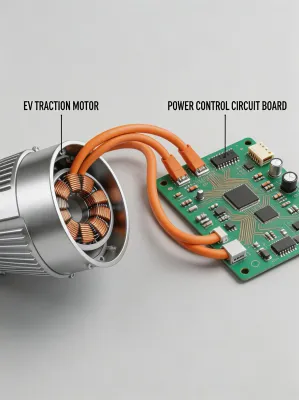
Industrial environments demand components that withstand vibration, wide temperature swings, and electromagnetic interference. TDK's industrial-grade capacitors and inductors are qualified for 20-year operational lifetimes in harsh conditions.
Our Lambda power supplies provide IEC 62368-1 safety-certified power conversion for PLC controllers, HMI panels, and servo drives. Ferrite cores and common mode chokes from TDK protect sensitive SCADA communication links from conducted and radiated interference.
Key Applications
- PLC and DCS Controllers
- Servo Motor Drives
- Industrial IoT Gateways
- SCADA Communication Modules
- Robotic System Power Supplies
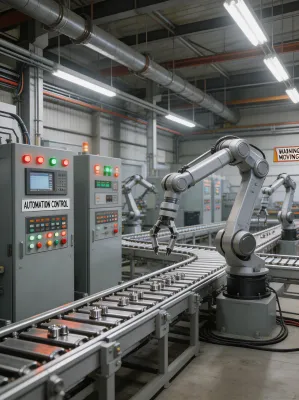
Patient safety drives every component selection in medical devices. TDK-Lambda power supplies hold UL 60601-1 and IEC 60601-1 Type BF certifications with 2xMOPP isolation, meeting the stringent leakage current requirements for patient-connected equipment.
Our low-noise ceramic capacitors provide stable filtering in sensitive analog front-ends for ECG monitors and ultrasound probes. MEMS pressure sensors from TDK measure respiratory flow and blood pressure with medical-grade accuracy.
Key Applications
- Patient Monitoring Systems
- Diagnostic Imaging (CT/MRI Power)
- Infusion Pumps and Ventilators
- Portable Medical Devices
- Laboratory Instrumentation
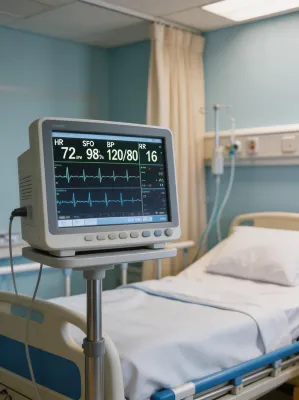
Hyperscale data centers consume enormous quantities of passive components. A single server motherboard can use 1,000+ MLCCs. TDK's high-capacitance C0G/X7R capacitors deliver stable decoupling for DDR5 memory channels and multi-phase VRM circuits running at 800 kHz+ switching frequencies.
Our high-current inductors support 48V direct-to-point-of-load architectures, while Lambda HFE series power shelves provide 96% efficient rectification for data center power distribution.
Key Applications
- Server VRM and Memory Decoupling
- Switch ASIC Power Delivery
- 48V Power Distribution Units
- Storage Array Power Supplies
- GPU Compute Server Power

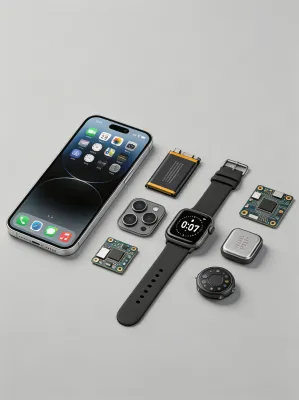
Miniaturization drives TDK's consumer component portfolio. Our 01005-size MLCCs (0.4 x 0.2 mm) enable thinner smartphone designs, while ultra-thin film inductors fit inside the limited PCB real estate of wireless earbuds and smartwatches.
TDK InvenSense motion sensors power gesture recognition in gaming controllers and step counting in fitness trackers. Our Chirp ultrasonic sensors bring precision ranging to AR/VR headsets and robotic vacuum cleaners.
Key Applications
- Smartphones and Tablets
- Wearable Devices
- True Wireless Earbuds
- Gaming Controllers
- Smart Home Devices